What Is Line Crossing Detection? How AI Cameras Prevent Unauthorized Access
Learn how AI line crossing detection uses existing CCTV cameras to prevent unauthorised access with real-time alerts.
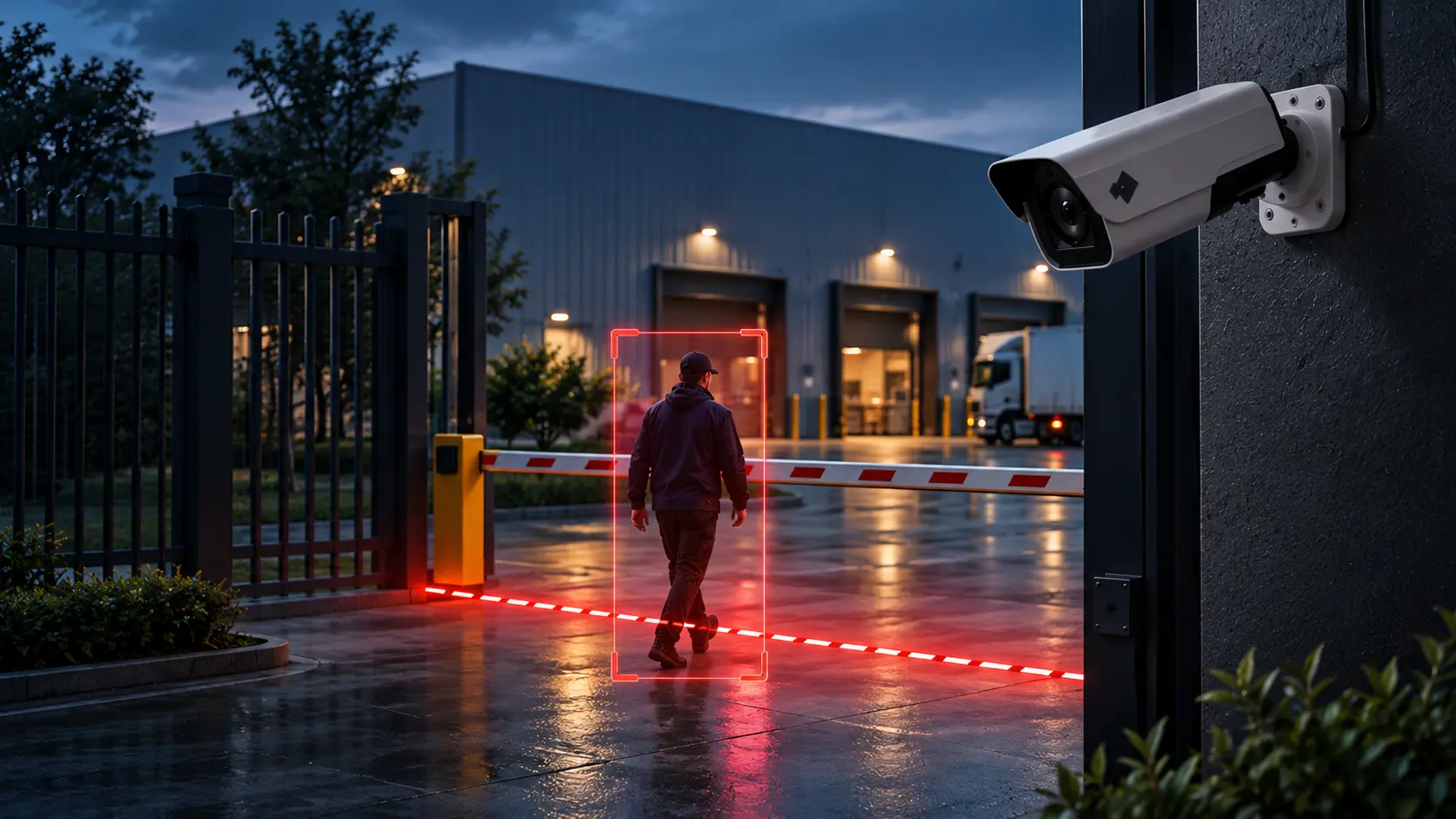
Perimeter security shouldn't begin after someone enters. Most facilities already have CCTV cameras covering entrances, loading docks, fences, and restricted zones. The problem isn't visibility; it's that traditional cameras simply record events instead of understanding them.
Line crossing detection transforms passive surveillance into proactive security by allowing intelligent video analytics to detect the exact moment a person or vehicle crosses a virtual boundary. Instead of reviewing footage after an incident, security teams receive real-time alerts while the event is happening.
What Is Line Crossing Detection?
Line crossing detection is an advanced video analytics feature that lets security teams draw a virtual line within a camera's field of view. When a person or vehicle crosses that digital boundary in a specified direction, the system instantly generates an event and alerts operators.
Unlike basic motion detection, AI doesn't react to every movement. It evaluates object type, direction, trajectory, and crossing behaviour, dramatically reducing unnecessary alarms.
Line crossing detection uses computer vision to monitor virtual tripwires on existing CCTV cameras, enabling real-time detection of unauthorised entry across gates, fences, corridors, and restricted areas.
How AI Line Crossing Detection Works
The workflow is simple but highly effective:
- Live video capture: Existing CCTV cameras continuously monitor entrances, gates, and restricted areas.
- AI object detection: The AI Video Engine identifies people and vehicles instead of reacting to random movement.
- Virtual tripwire monitoring: A digital line is drawn across the camera's field of view with configurable direction rules.
- Event verification: The system validates the crossing based on object type, trajectory, and movement direction.
- Real-time alerts: Alert mechanisms instantly notify operators through the monitoring dashboard via real-time alerts.
- Event recording: Every incident is automatically logged for future investigation.
Rather than monitoring dozens of camera feeds manually, security teams only focus on meaningful security events.
Motion Detection vs AI Line Crossing Detection
Traditional motion detection and AI line crossing solve very different problems.
|
Feature |
Motion Detection |
AI Line Crossing Detection |
|
Trigger |
Any movement |
Crossing a virtual line |
|
Human & vehicle recognition |
❌ |
✅ |
|
Direction detection |
❌ |
✅ |
|
False alarms |
High |
Low |
|
Best for |
Small indoor rooms |
Perimeter & restricted zones |
|
Real-time security events |
Limited |
✅ |
The key difference is context. AI understands what crossed the boundary not simply that pixels changed.
One-Way vs Two-Way Line Crossing
A major advantage of AI line crossing detection is directional intelligence.
One-Way Detection
The system triggers an alert only when someone enters a restricted area while ignoring movement in the opposite direction. This is ideal for employee-only entrances, warehouse gates, and secure facilities.
Two-Way Detection
Both entry and exit movements are recorded, making it suitable for public entrances, corridors, parking lots, and vehicle access control where complete movement history is required.
Why AI Reduces False Alarms
False alarms are one of the biggest challenges in perimeter security. Weather, shadows, insects, and moving vegetation often overwhelm traditional motion detection. AI line crossing applies contextual filtering instead.
|
Scene |
AI Decision |
|
Tree branches moving |
Ignore |
|
Rain & shadows |
Ignore |
|
Human crossing fence |
Alert |
|
Vehicle entering gate |
Alert |
Instead of detecting motion alone, the system evaluates object classification and movement across the virtual boundary before generating an alert.
Every Event Becomes Searchable Intelligence
Detecting a breach is only the beginning. Within YugYog's Event Intelligence, every line-crossing event is automatically stored with:
- Camera location
- Timestamp
- Event category
- Searchable video clip
- Investigation history
Instead of manually reviewing hours of CCTV footage, operators can search and retrieve incidents within seconds, making audits and investigations significantly faster.
Can AI Work with Existing CCTV Cameras?
Yes. One of the biggest advantages of intelligent video analytics is that organisations typically don't need to replace their camera infrastructure.
YugYog's Camera Integration supports ONVIF-compatible IP cameras, allowing businesses to add intelligent analytics on top of existing surveillance systems across commercial facilities. This makes deployment faster while reducing hardware costs.
Best Camera Placement for Line Crossing Detection
Correct camera placement has a direct impact on detection accuracy. Virtual tripwires should be positioned where unauthorised movement is most likely to occur.
Recommended installation areas:
- High Priority: Main entry gates, perimeter fencing, restricted corridors, and loading docks.
- Medium Priority: Emergency exits.
Best practices:
- Position cameras perpendicular to the crossing path.
- Avoid severe backlighting and glare.
- Maintain a clear view of the virtual boundary.
- Use overlapping coverage for critical entrances.
Line Crossing vs Loitering vs Intrusion Detection
These AI features solve different security problems and should be deployed based on the environment. To dive deeper into these differences, read our full guide on loitering detection vs line crossing vs intrusion detection.
- Line Crossing Detection: Crossing gates, fences, corridors, and virtual boundaries.
- Intrusion Detection: Entering or remaining inside a protected zone.
- Loitering Detection: Detecting individuals who stay in an area beyond a defined time.
If your goal is protecting perimeters, line crossing detection is typically the first feature to deploy.
Industries That Benefit Most
- Warehouses & Logistics: Warehouses secure loading docks, inventory zones, and after-hours perimeter access while monitoring vehicle entry points.
- Manufacturing: Manufacturing facilities prevent unauthorised personnel from entering hazardous machinery and production areas with virtual safety boundaries.
- Corporate Campuses: Protect parking lots, research facilities, and employee-only entrances without disrupting daily operations.
- Government & Critical Infrastructure: Strengthen perimeter monitoring across sensitive facilities where rapid incident detection is essential.
Secure Perimeters Before Incidents Escalate
Perimeter security is no longer about recording what happened it's about identifying threats the moment they occur. By combining existing CCTV cameras with advanced line crossing detection, organisations can protect restricted areas, reduce false alarms, and respond faster to unauthorised access. Whether you're securing a warehouse, manufacturing plant, corporate campus, or government facility, intelligent virtual tripwires provide a practical first step toward proactive AI video surveillance.