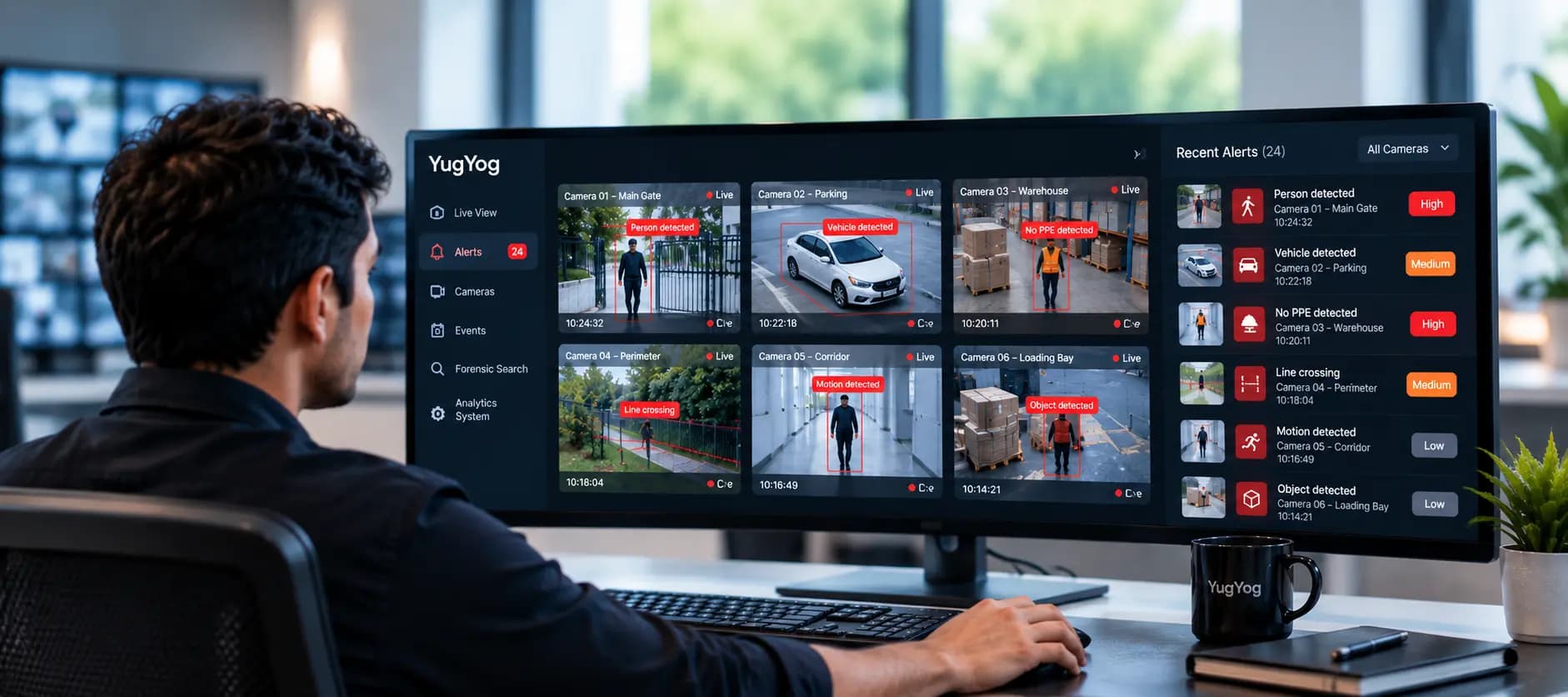
AI Video Analytics for Retail Stores: 7 Ways to Improve Store Security
Discover 7 ways AI video analytics helps retail stores improve security, monitor restricted areas, manage queues and investigate incidents.
Walk into almost any retail store and you'll find CCTV cameras covering entrances, checkout counters, aisles and stockrooms.
Retailers have invested heavily in surveillance to protect merchandise, monitor customer activity and investigate incidents. Yet most cameras still perform one basic function: recording video.
When an incident occurs, store managers and security teams often have to scroll through hours of footage, switch between camera feeds and manually locate the relevant moment.
The challenge isn't a lack of cameras. It's making the footage useful.
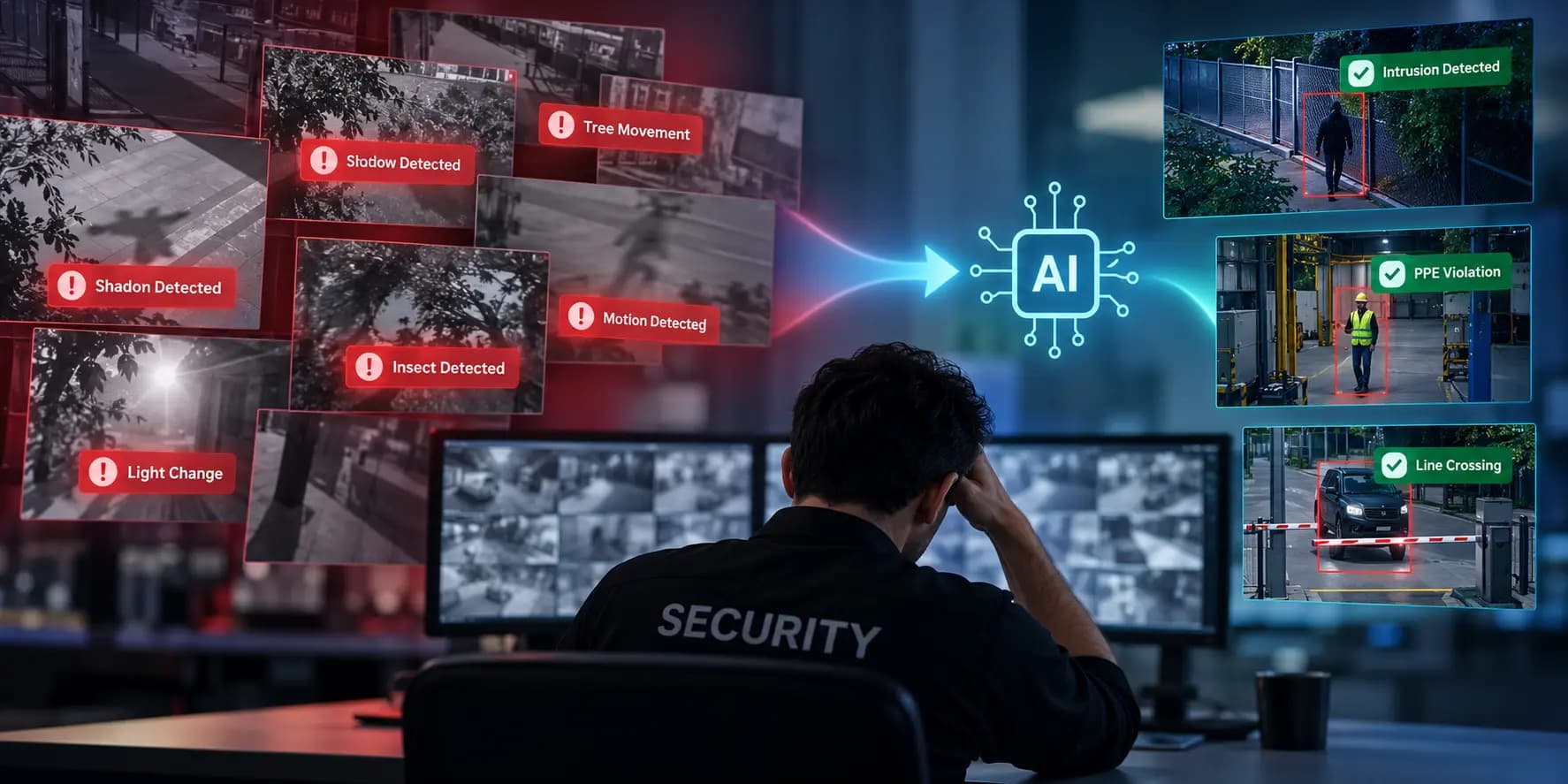
AI video analytics for retail helps bridge this gap by analysing camera feeds, identifying configured events and making relevant footage easier to find. From monitoring restricted areas to understanding queue activity, it helps retail teams move beyond passive surveillance.
What Is AI Video Analytics for Retail?
AI video analytics uses artificial intelligence and computer vision to analyse video feeds from surveillance cameras and identify specific events, objects or activities.
Instead of simply recording what happens inside a store, an intelligent video analytics system can identify configured events such as:
- People entering restricted areas
- Movement across virtual boundaries
- Loitering in designated zones
- Queue activity and crowd density
- Fire and smoke indicators
- Other predefined security events
When a relevant event is detected, the system can generate an alert or create a searchable event record, depending on its capabilities.
This allows retail security teams to focus on events that require attention instead of continuously monitoring multiple screens.
7 Ways AI Video Analytics Improves Retail Store Security
1. Monitor Store Entrances and Exits
Entrances and exits are among the busiest areas in a retail store. They are also important points for monitoring access and investigating security incidents.
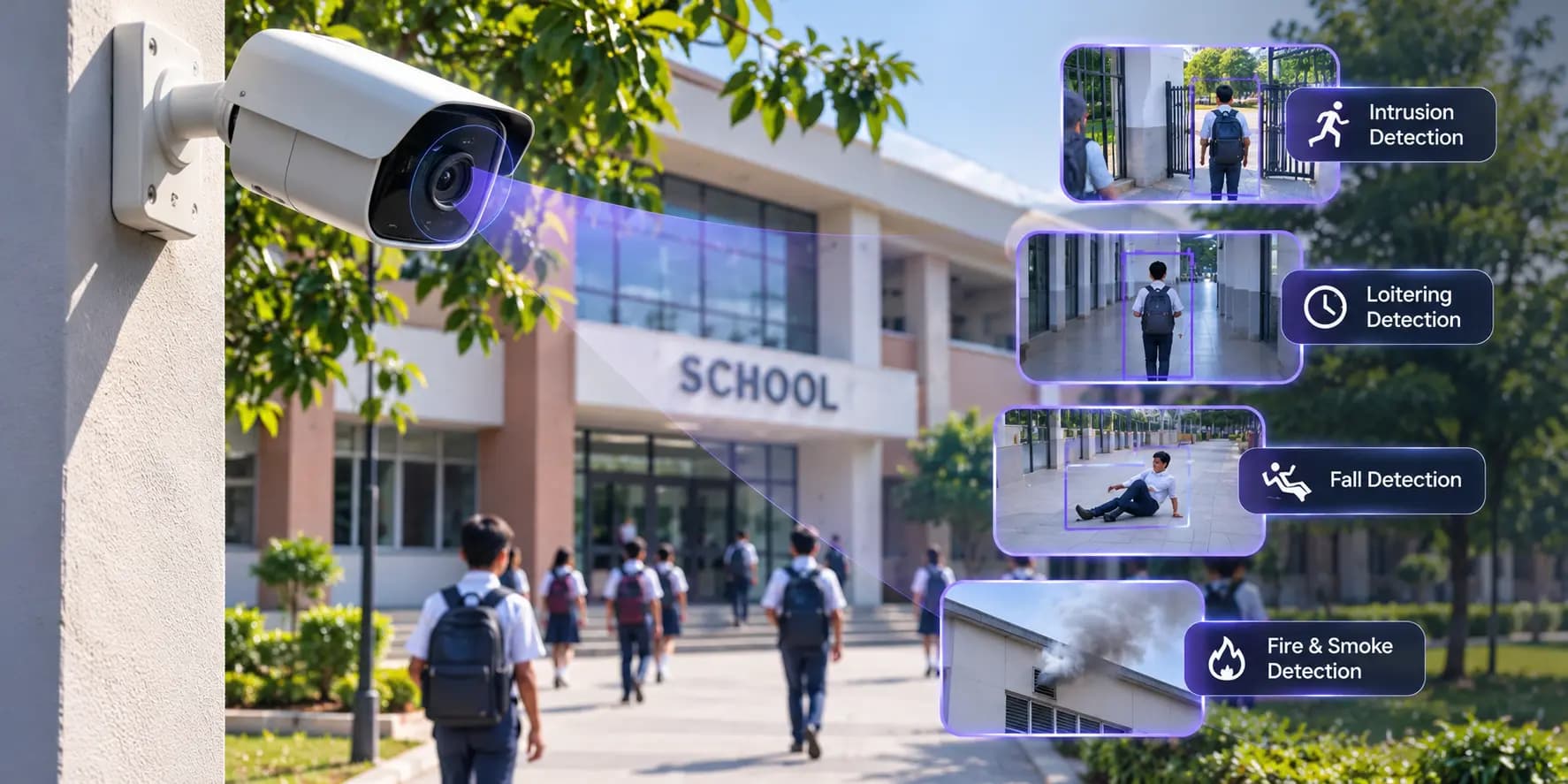
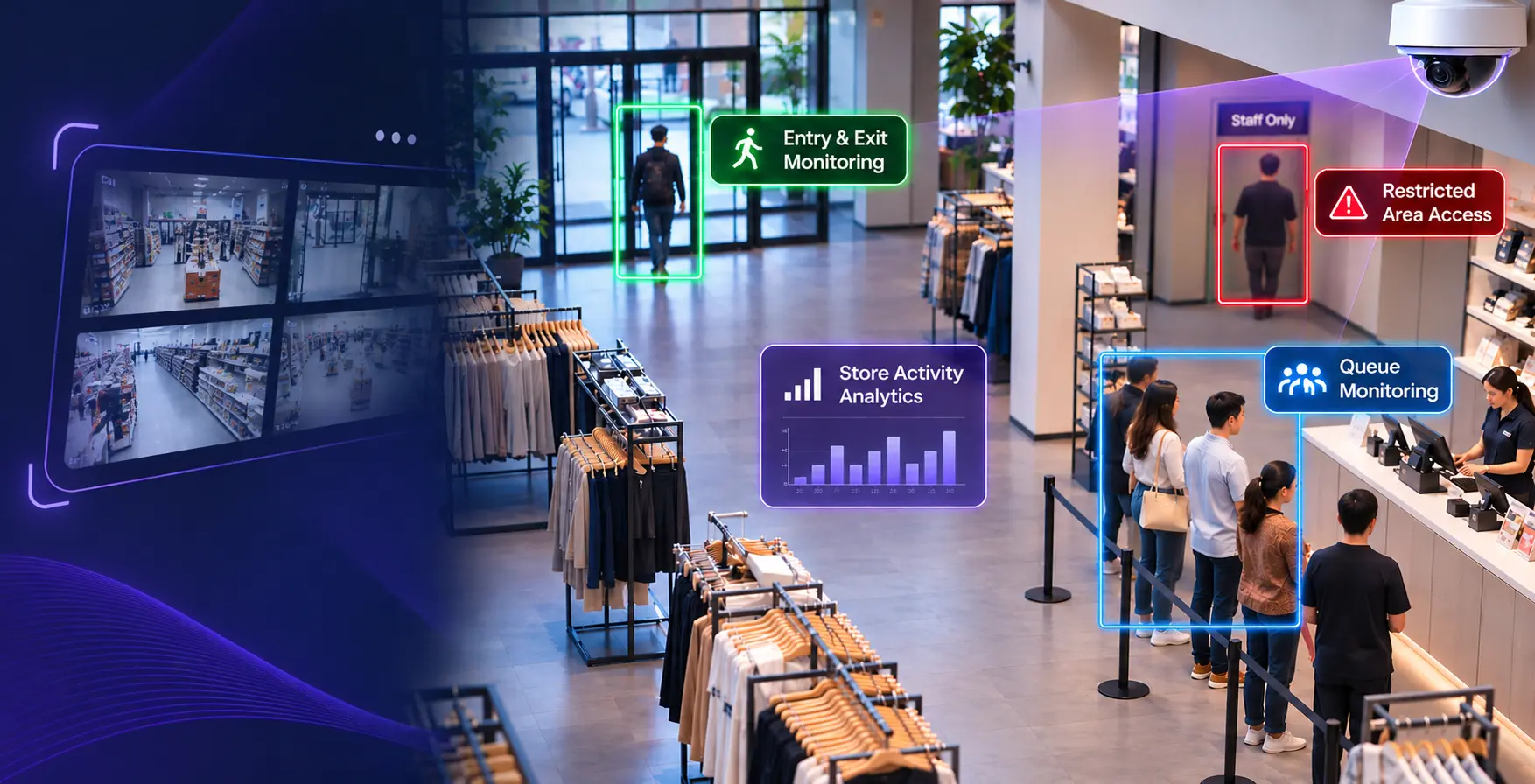
AI-powered intrusion detection and line crossing can monitor defined boundaries and identify movement across configured zones.
Retail security teams can use these alerts to review activity around entrances, exits and other important access points.
2. Protect Stockrooms and Restricted Areas
Stockrooms, inventory rooms and staff-only sections often contain valuable merchandise and equipment.
Unauthorised access to these areas can create security and inventory management challenges.
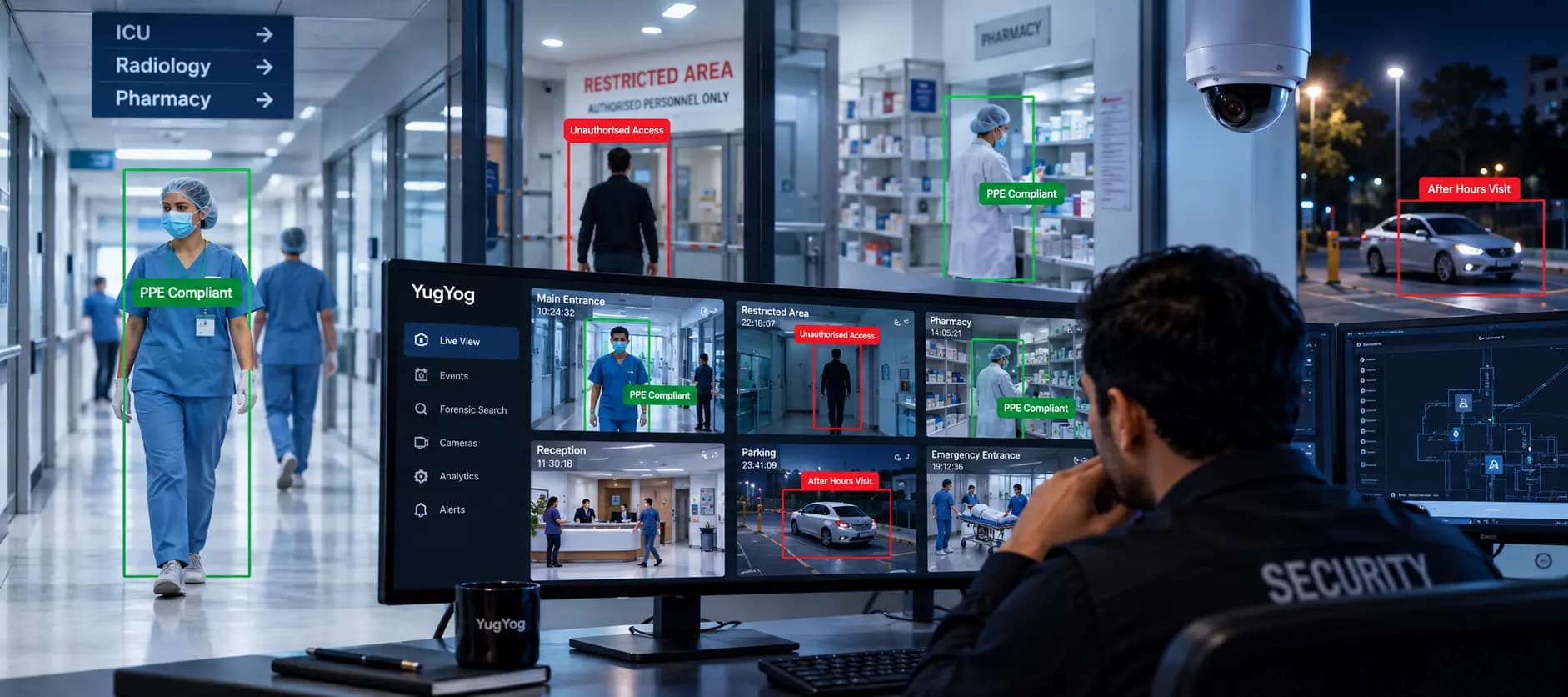
With restricted-zone monitoring, retailers can define specific areas within a camera's view and receive alerts when configured entry conditions are met.
This gives security teams better visibility into activity around sensitive areas, particularly outside normal operating hours.
3. Identify Loitering and Unusual Activity
Not every security incident involves forced entry or visible damage. Some situations require teams to pay closer attention to activity in specific areas.
Loitering detection can identify when a person remains within a defined zone beyond a configured duration.
For retail stores, this can be useful around stockrooms, restricted entrances, service corridors and other sensitive locations.
An alert does not establish someone's intent. It simply helps staff identify activity that may need further review.
4. Monitor Customer Queues and Store Congestion
Long queues can affect customer experience, especially during weekends, festive sales and promotional periods.
Where queue analytics is supported, AI video analytics can help monitor queue length, waiting areas and crowd density.
Retail managers can use these insights to identify busy periods, assess checkout congestion and make better decisions about staff allocation.
This makes video analytics useful not only for security but also for day-to-day store operations.
5. Detect Fire and Smoke Indicators
Retail stores contain electrical equipment, lighting systems, storage areas and other potential sources of fire hazards.
Where supported, AI-based fire and smoke detection can identify visible indicators in camera feeds and alert the relevant team.
This can provide an additional layer of monitoring alongside dedicated fire detection and alarm systems. It should not replace certified fire safety equipment or established emergency procedures.
6. Find Relevant CCTV Footage Faster
When a security incident occurs, finding the exact moment in hours of recorded footage can be difficult.
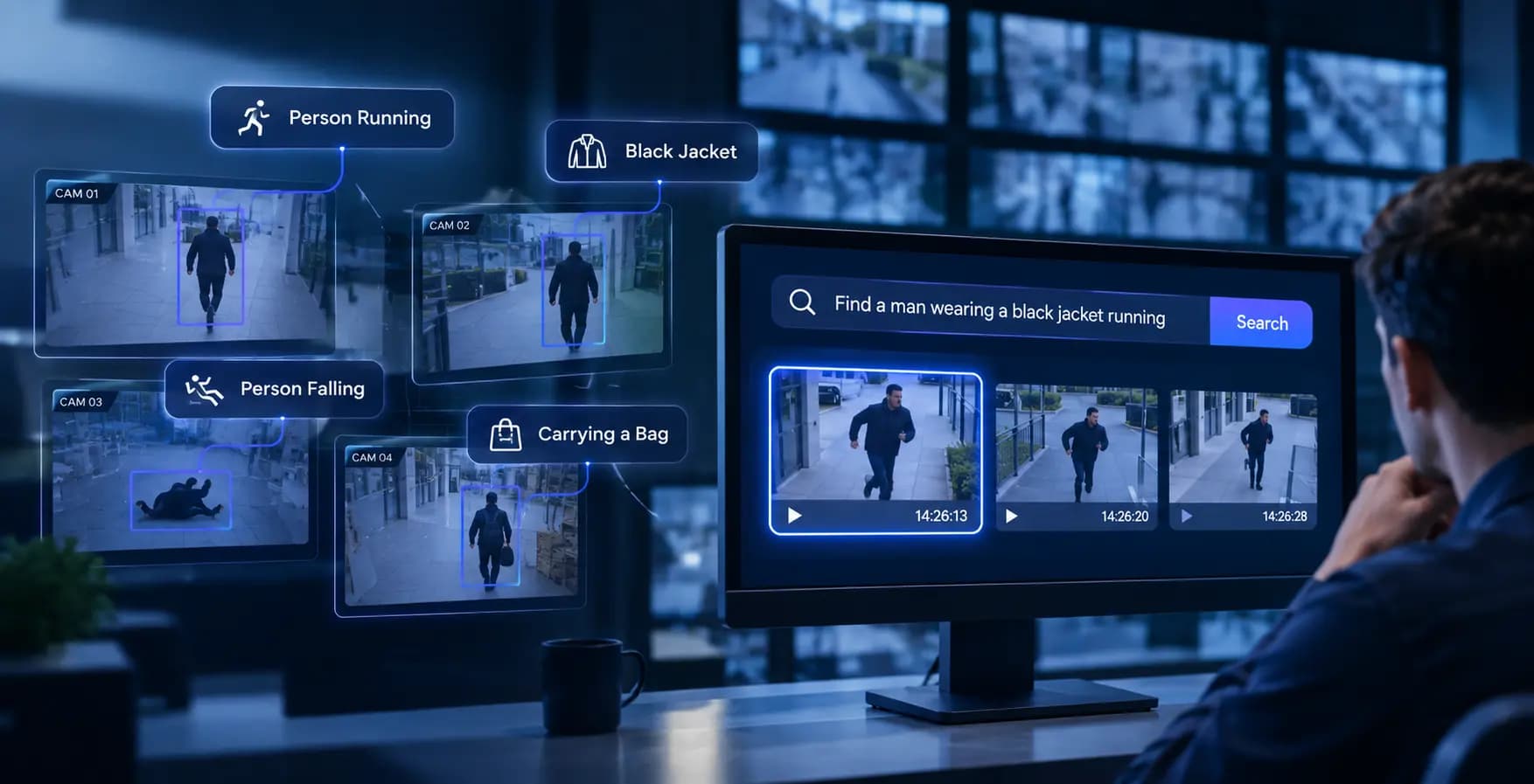
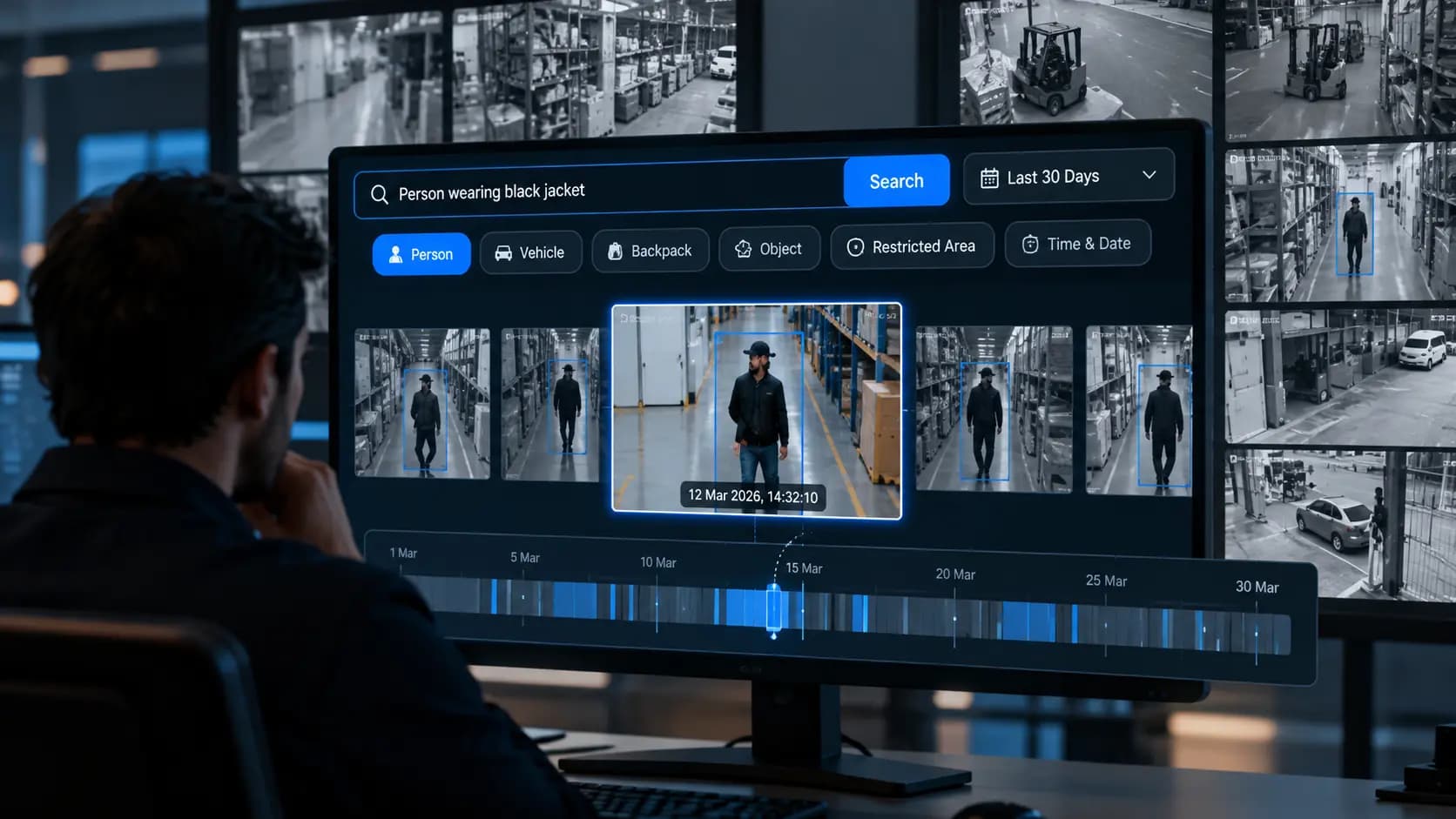
AI forensic search makes investigations more efficient by allowing authorised users to search footage using descriptions, objects, locations or time-based criteria supported by the platform.
For example, a store manager may search for a person wearing a particular colour near the checkout area or look for activity around a specific entrance.
Instead of manually reviewing every recording, teams can narrow down potentially relevant clips and verify the incident.
7. Monitor Multiple Retail Locations
Retail chains often operate several stores across different cities or regions. Monitoring each location separately can make security operations difficult to coordinate.
A platform that supports centralised, multi-location monitoring can help authorised teams access camera feeds, review alerts and investigate events across connected stores.
This gives head-office security teams better visibility while allowing individual store teams to manage their local operations.
Where Should Retail Stores Use AI Video Analytics?
Different areas of a retail store have different security and operational requirements. The analytics should be configured according to what each location needs to monitor.
|
Entrances and exits |
Intrusion and line crossing detection |
|
Stockrooms |
Restricted-zone monitoring |
|
Cash offices and vaults |
Strict access control and unauthorized entry alerts |
|
Checkout counters |
Queue analytics and transaction monitoring |
|
Store aisles |
Loitering detection in high-value merchandise areas |
|
Fitting room entrances |
Concealment detection and entry/exit count tracking |
|
Loading and delivery areas |
Access, vehicle, and perimeter monitoring |
|
Parking lots and exterior |
License plate recognition, vehicle monitoring, and perimeter security |
|
Electrical and storage areas |
Fire and smoke detection, where supported |
|
Multiple outlets |
Centralised monitoring and forensic search |
The objective is not to apply every detection feature to every camera. It is to configure the right analytics for the right areas.
AI Video Analytics vs Traditional CCTV
Traditional CCTV and AI video analytics both use surveillance cameras, but the way they help security teams is different.
|
Traditional CCTV |
AI Video Analytics |
|
Records video footage |
Analyses video for configured events |
|
Relies heavily on manual monitoring |
Highlights events that require attention |
|
Requires manual footage review |
Helps narrow down relevant recordings |
|
Provides limited operational insights |
Can support queue and activity analytics where available |
AI video analytics does not replace CCTV cameras. It adds an intelligence layer that helps retailers make better use of their existing surveillance infrastructure.
How to Choose the Right AI Video Analytics System
Choosing an AI video analytics platform requires more than comparing the number of detection features.
Retailers should consider the following factors before implementation:
1. Existing Camera Compatibility
Check whether the platform supports your existing camera infrastructure, including the required IP camera, ONVIF or RTSP integrations.
2. Relevant Detection Capabilities
Identify the events that matter to your operations. A store focused on restricted-area security may have different requirements from one prioritising queue management.
3. Deployment Flexibility
Consider whether cloud, hybrid or on-premises deployment is more suitable for your infrastructure, network and security requirements.
4. Search and Investigation Capabilities
Look for features that help security teams retrieve relevant footage without manually reviewing hours of recordings.
5. Privacy and Access Control
Retail surveillance may capture employees, customers and visitors. Ensure the system has appropriate access controls, defined retention policies and safeguards aligned with applicable data protection requirements.
6. Scalability
If your business operates multiple outlets, consider whether the platform can support additional cameras and locations without making monitoring more complicated.
How YugYog Helps Retailers Get More From Existing CCTV
Retailers don't necessarily need to replace their existing surveillance infrastructure to introduce intelligent monitoring.
YugYog adds an AI-powered intelligence layer to supported IP camera environments, helping businesses turn passive CCTV footage into searchable events and actionable alerts.
With YugYog, retail teams can use capabilities such as:
- Loitering Detection: Identify activity that remains within configured zones beyond a defined duration.
- Queue Analytics: Monitor queue activity and crowd density where supported.
- Intrusion Detection: Monitor restricted areas and identify configured entry events.
- After-Hours Monitoring: Monitor activity around stores and designated zones outside operating hours.
- AI Forensic Search: Find relevant moments in recorded footage using plain-English descriptions.
YugYog also supports cloud, hybrid and air-gapped deployment options, allowing businesses to evaluate an architecture that fits their infrastructure and security requirements.
Explore YugYog's AI Video Analytics Platform and its Retail Industry Solutions.
Final Thoughts
Retail security is no longer just about having cameras installed across a store. It is about knowing which events need attention and being able to investigate them without spending hours searching through recordings.
AI video analytics helps retailers make their existing CCTV infrastructure more useful by supporting event detection, operational monitoring and faster investigations.
From entrances and stockrooms to checkout counters and multiple outlets, intelligent video monitoring can help retail teams improve visibility across their operations.
The real opportunity isn't installing more cameras. It's making the cameras you already have more intelligent.
Ready to Make Your CCTV Smarter?
Your retail store already has cameras capturing activity every day. YugYog helps turn that footage into actionable intelligence through real-time event detection and plain-English forensic search.
Connect your existing supported camera feeds and explore what intelligent video monitoring can do for your retail operations.
Book a personalised demo: https://yugyog.ai/contact-us